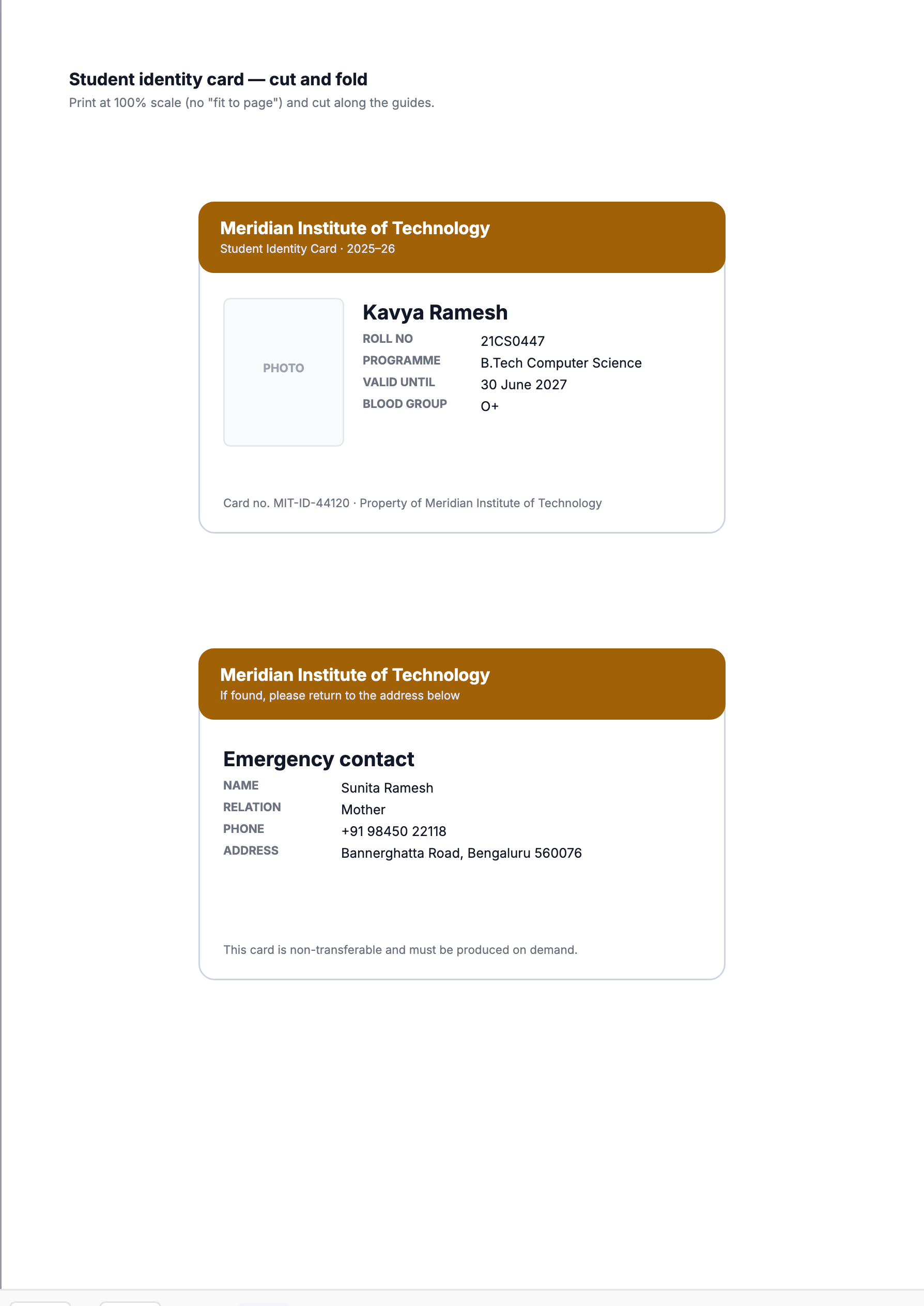
An ID card is a small document with a lot of jobs: it identifies the holder, grants access, and — in the case that matters most — tells somebody what to do if the holder is found unwell or unconscious.
This template is a two-sided card laid out on a portrait A4 sheet with cut guides, so it prints correctly from an ordinary printer with no page setup.
Why it is on an A4 sheet
Card printers are not universal, and most institutions produce ID cards in batches from a normal office printer onto card stock, then cut them.
Laying the front and back out on a portrait sheet with crop marks is how that actually gets done. Print at 100% scale — not "fit to page", which silently shrinks everything by a few percent and makes the cards the wrong size.
If you do have a card printer, the card artwork itself is the top block; delete the sheet furniture and set the page size to match your stock.
The front
Keep it to what has to be readable at a glance across a desk:
- Institution name, prominently
- Photo
- Full name, larger than everything else
- Roll or ID number
- Programme or department
- Valid-until date
The validity date is the field people skip and then regret. A card with no expiry stays in circulation after the holder has left, and there is no way to tell a current card from a stale one.
The back is for the emergency contact
This is the part worth taking seriously.
A card that lists a name, a relationship and a working phone number is genuinely useful to a first responder. Blood group belongs on the front where it is visible without turning the card over.
Also include the institution's address and a "if found, please return" line. It costs two lines and it is how lost cards come back.
Photographs
Collect them once, at a consistent size, on a plain background. The most common cause of an ID batch looking amateur is not the layout — it is twenty photos at twenty different crops and exposures.
The template has a fixed photo box. Crop images to that aspect ratio before placing them rather than stretching them to fit, which produces the distinctive squashed-face effect that no amount of good typography rescues.
Numbering and replacement
Give each card a number distinct from the roll number. When a card is lost and replaced, the new card gets a new card number against the same student, and the old number is voided.
Without this you cannot tell a reported-lost card from the replacement, which defeats the point of deactivating it.
Producing a batch
Student records already hold every field on this card except the photo. Issuing cards for an intake is the same problem as issuing certificates: one document per row, generated rather than edited.