A proposal is a sales document that has to survive being read by someone who was not in the meeting. That is the constraint everything else follows from.
The person who briefed you understands the context. The person who approves the budget often does not, and they will read the summary and the price table and very little in between.
Lead with the problem, in their words
The most common structural mistake is opening with a description of your company. Nobody is evaluating your founding year; they are trying to work out whether you understood the problem.
Open by restating the problem specifically enough that they recognise it:
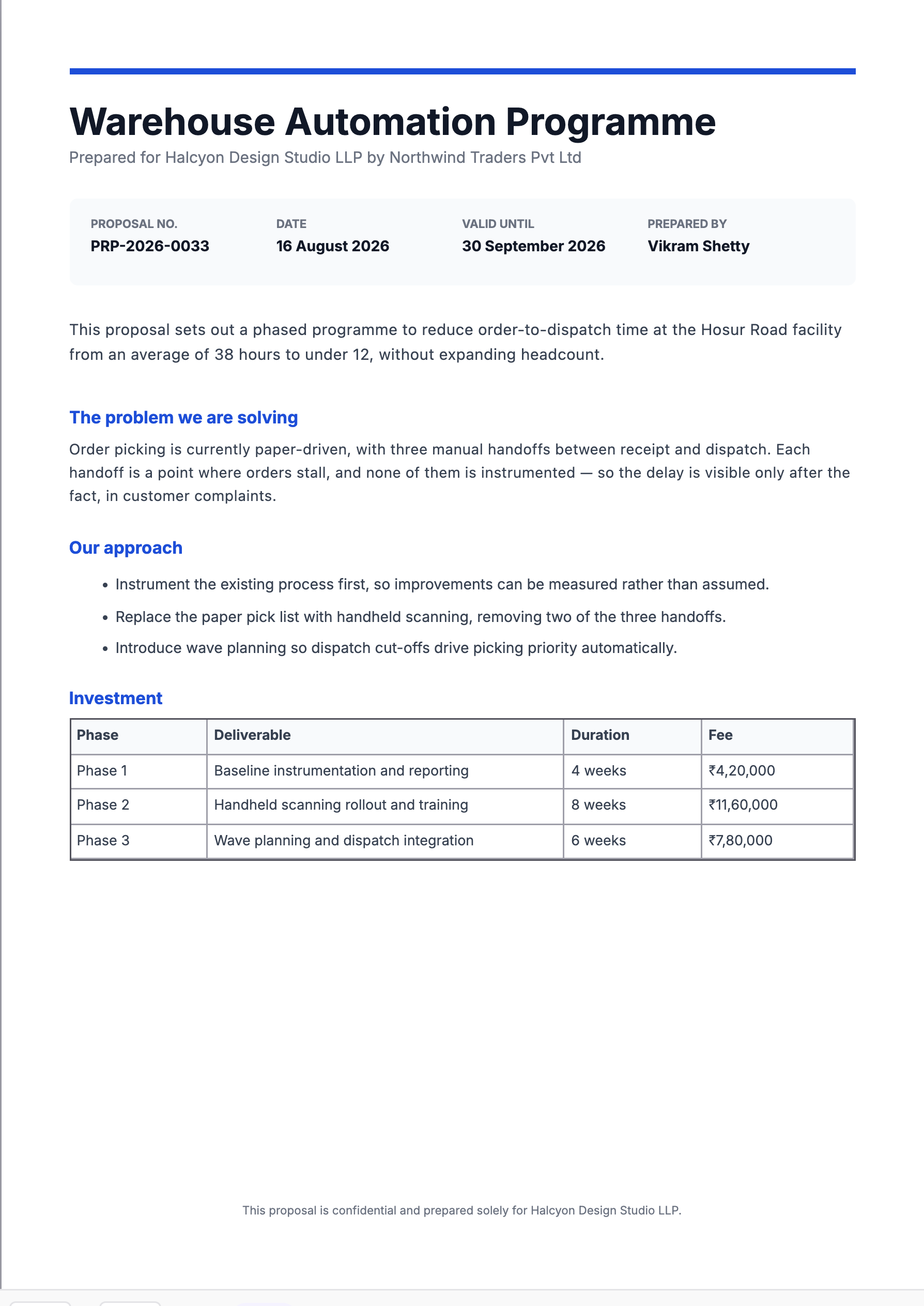
Order picking is currently paper-driven, with three manual handoffs between receipt and dispatch. Each handoff is a point where orders stall, and none of them is instrumented — so the delay is visible only after the fact, in customer complaints.
Someone reading that knows immediately whether you were listening. A generic paragraph about operational efficiency tells them nothing.
Quantify the outcome, not the effort
"Reduce order-to-dispatch time from an average of 38 hours to under 12, without expanding headcount" is a claim that can be evaluated and, later, checked.
"Improve efficiency and streamline operations" cannot. It also makes the price impossible to justify, because there is nothing to weigh it against.
If you genuinely cannot quantify the outcome, say what you will measure and when — that is honest and still useful.
Phase the work
A single large number invites a single large decision, and large decisions get deferred.
Phasing does three things: it lets the client start with a smaller commitment, it gives you a natural checkpoint to re-scope, and it makes the total feel like a plan rather than a quote. The template's investment table has phase, deliverable, duration and fee — four columns that answer "what do I get, when, for how much".
The first phase should be small and should produce something the client can evaluate independently. In the sample, that is baseline instrumentation: inexpensive, fast, and it makes everything after it measurable.
Say what you will not do
Proposals rarely include exclusions, and it is a missed opportunity. Naming what is out of scope makes the in-scope items sharper, and it prevents the conversation six weeks in where the client assumed something was included.
Put a validity date on it
Costs change, availability changes, and an accepted proposal from last year is an awkward conversation. The template carries a valid-until date in the header.
Thirty to sixty days is typical. Whatever you choose, state it as a date.
Keep the numbers consistent with what follows
The proposal's phases and fees should reappear, unchanged, in the contract and then in the invoices. When they do not match, someone has to reconcile them, and that reconciliation is where trust erodes.
Building all three from the same underlying figures is the simplest way to keep them aligned — and it is the difference between a proposal that closes and one that generates a week of clarifying emails.