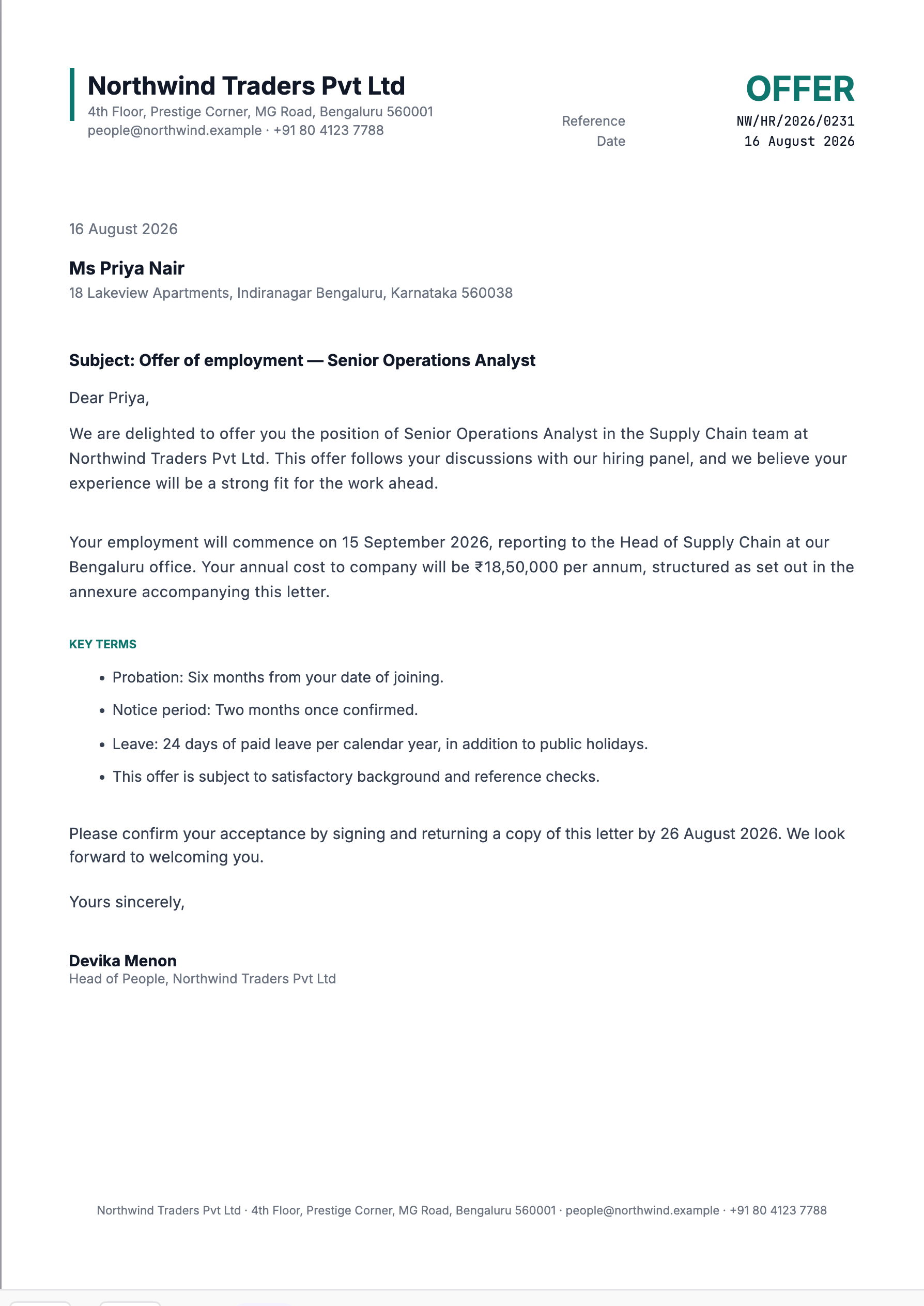
An offer letter is the first document a new colleague reads from you, and often the one they show their family. It is worth getting right for that reason alone.
It is also, in most places, a contractual document. Whatever it says about salary, notice or probation is what you have agreed — so vagueness that feels diplomatic when you write it becomes expensive when someone relies on it.
What an offer letter should state plainly
| Field | Notes |
|---|---|
| Job title | The one that will appear in the system, not an aspirational version. |
| Department and reporting line | Who they report to, by role if not by name. |
| Start date | A specific date. "Early September" is not one. |
| Location | Including whether it is hybrid or remote, and from where. |
| Compensation | The figure, the period, and what it includes. |
| Probation | Length, and what happens at the end of it. |
| Notice period | Both during and after probation, if they differ. |
| Leave | Days per year, and whether public holidays are additional. |
| Conditions | Background checks, references, right to work. |
| Acceptance deadline | So the offer does not stay open indefinitely. |
Be exact about compensation
"CTC" means different things at different companies, and a candidate comparing two offers may be comparing incompatible numbers.
State the annual figure, say explicitly that it is cost to company if that is what you mean, and attach a breakdown. The breakdown is where employer contributions, variable pay and benefits are separated from what actually arrives in a bank account each month. A candidate who discovers that difference after joining feels misled even when nothing was hidden.
If any part is variable, say what it depends on and when it is assessed. "Up to 15% performance bonus" with no stated basis is a number people plan around and then resent.
Conditions should be stated before acceptance, not after
If the offer depends on background checks, references, qualification verification or right-to-work documentation, say so in the letter. Candidates resign from other jobs on the strength of an offer; discovering a condition afterwards is a genuinely bad position to put someone in.
The same applies to anything unusual — a required relocation, a bond, a notice period longer than the local norm, mandatory travel. If it might change their decision, it belongs in the letter.
The tone is part of the job
Most offer letters read like they were written by a legal department to protect the company from the person receiving them. That is a strange note to open a relationship on.
You can be precise and warm at the same time. Say you are pleased. Say why they were chosen, in one line. Then be exact about the terms. Precision is not coldness — it is respect for someone making a significant decision.
What comes next
Once the offer is accepted, the same details flow into the joining letter, the payroll record and the employment agreement. Retyping them at each stage is how a start date ends up different in two systems.
If you hire regularly, it is worth generating these from one record per candidate. It removes a whole class of error and turns an afternoon of formatting into a click.