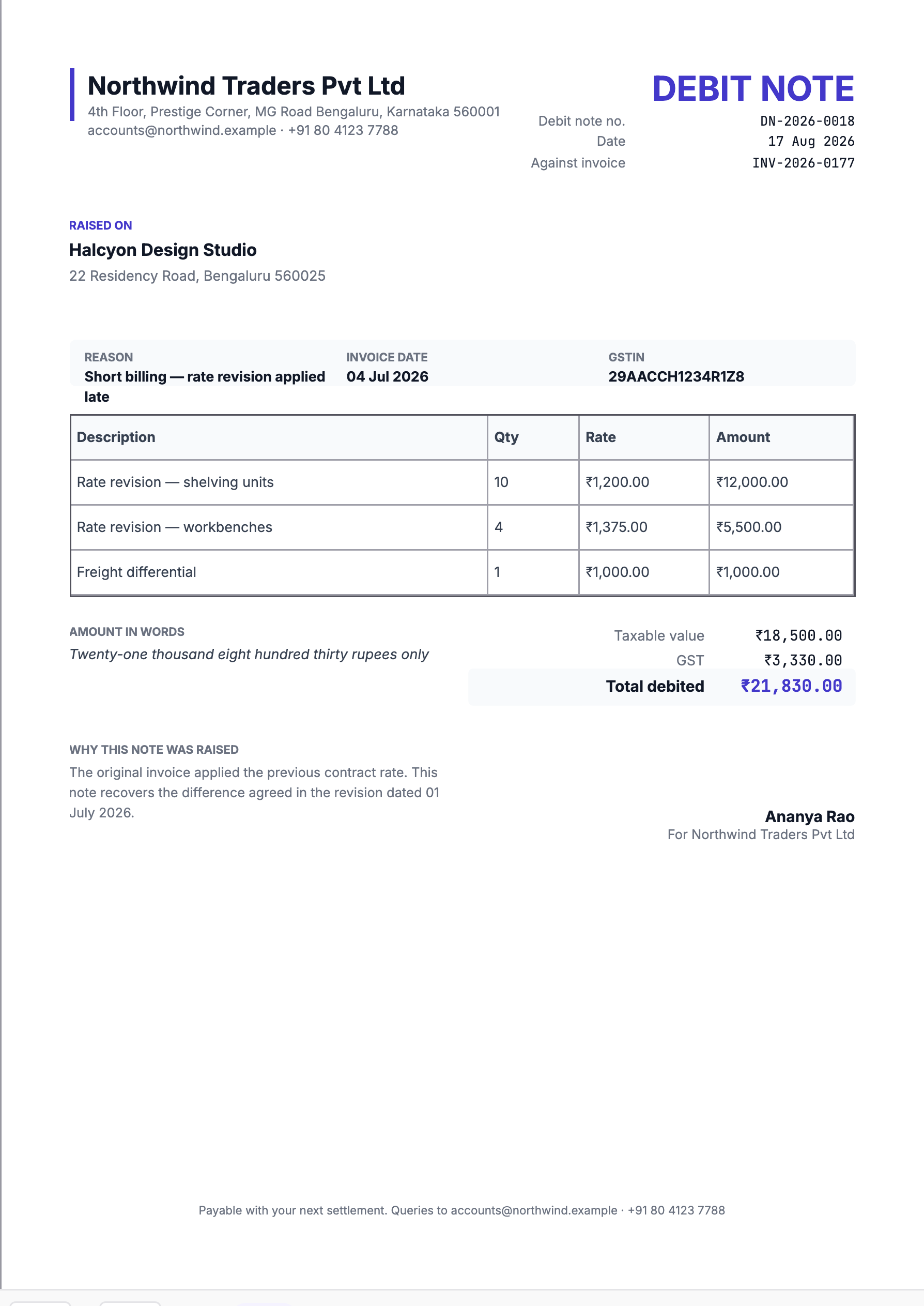
A debit note increases what a customer owes on an invoice that has already gone out — because the rate was wrong, the quantity was understated, or a cost was missed. It is the awkward twin of the credit note: same structure, same header, and a conversation nobody enjoys having.
Say who is raising it and why, in that order
Both parties to a transaction can produce something called a debit note. A supplier raises one to recover an undercharge. A buyer raises one to signal a claim against a supplier — short delivery, rejected goods, a penalty. The word alone does not tell you which, and the two are handled completely differently in the books.
This template is the supplier's version: it increases the amount receivable and carries tax. The raised on block names the customer, and the explanation block at the foot is where you say what happened. Use it. A debit note arriving with nothing but a figure gets read as either a mistake or an opportunistic top-up, and either way it sits unpaid while somebody asks around.
What belongs on a debit note
| Field | Why |
|---|---|
| Debit note number | Unique, in a sequential DN series of its own. |
| Debit note date | When the note was raised. |
| Against invoice | The original invoice number this supplements. |
| Invoice date | The original's date — often months earlier. |
| Raised on | The customer, with GSTIN where they are registered. |
| Reason | Short billing, rate revision, missed charge. |
| Line items | The differential being recovered, not the full value. |
| Taxable value | The additional value, before tax. |
| GST | At the rate that applied to the original supply. |
| Total debited | And the same figure in words. |
| Explanation | What went wrong and what authorises the recovery. |
Bill the difference, not the whole thing again
This is the error worth being careful about. If you invoiced ten shelving units at ₹8,800 and the contracted rate was ₹10,000, the debit note is for ₹1,200 × 10, not for ₹10,000 × 10. Quantity, rate and amount on the note should all describe the gap.
Label the lines so that is obvious — "Rate revision — shelving units" rather than "Shelving units". Somebody comparing the note to the original invoice should not have to work out whether they are looking at a top-up or a duplicate. When it is ambiguous, accounts payable assumes duplicate, and the note goes on hold.
Point at the authority for the recovery
The explanation block exists because a debit note is, in effect, a request to pay more than the agreed document said. It needs a reason that is checkable: the dated rate revision, the clause in the supply agreement, the purchase order that carried the correct figure, the weighbridge slip.
"The original invoice applied the previous contract rate. This note recovers the difference agreed in the revision dated 01 July 2026" is a sentence somebody can verify in a minute and approve. "Rate difference" is not, and it will come back to you as a question.
Raise it promptly
A debit note against an invoice from four months ago is a harder conversation than one raised the same week, and not only for goodwill reasons. Your customer may have closed the period, claimed input tax credit on the original figure, and passed the cost through to their own client at the rate you billed.
There are also deadlines for declaring adjustments to a financial year's supplies in GST returns, and they have shifted over the years — check the current cut-off rather than assuming, because a note raised after it still creates a receivable but leaves the tax component stranded. If you find a systematic short billing, work through the affected invoices in one pass and issue the notes together. Discovering them one at a time over several months does more damage to the relationship than the amounts justify.