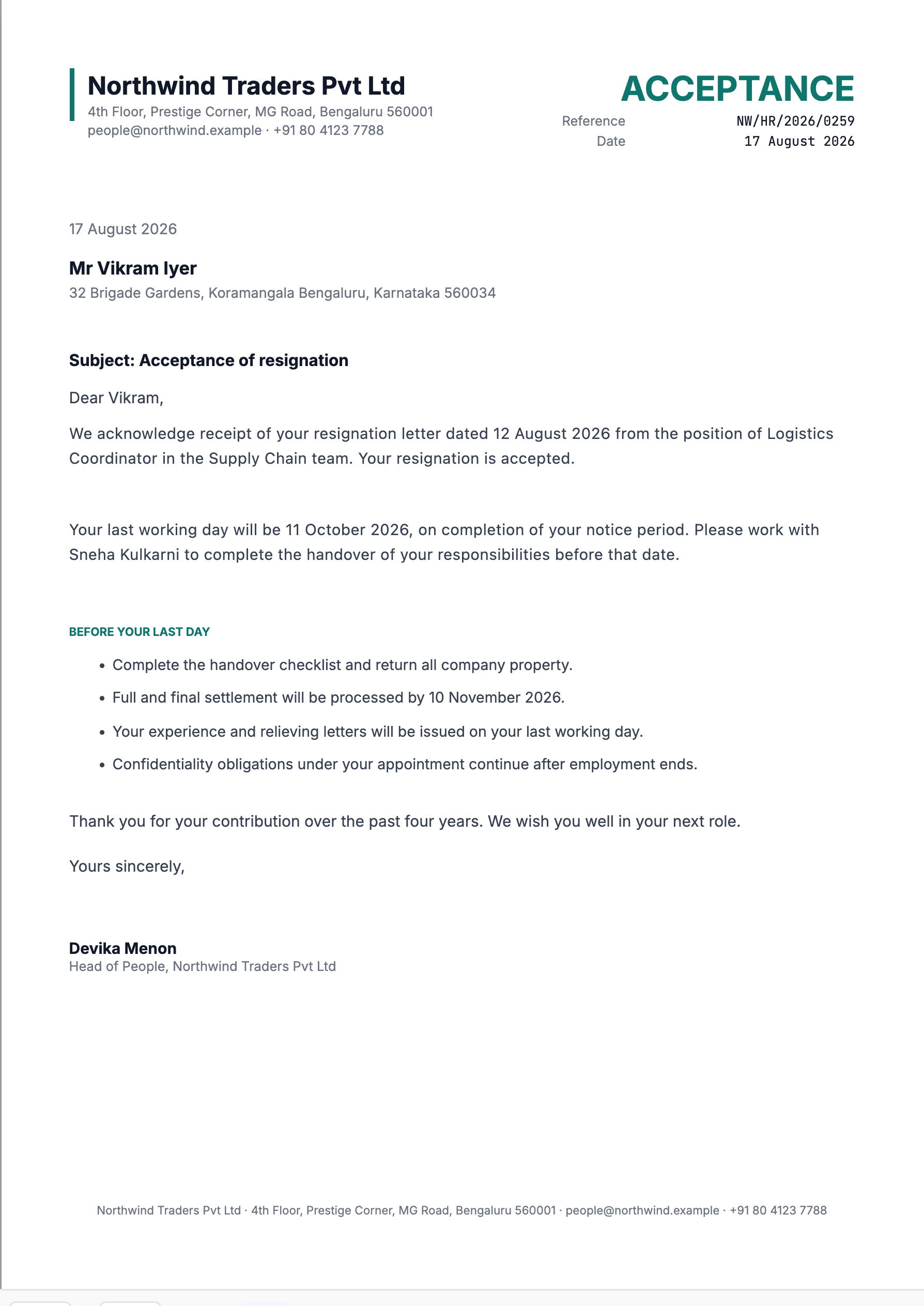
A resignation is a one-sided document until the employer answers it. The acceptance letter is what turns it into an agreed leaving date, and it is the page produced years afterwards to show the exit was orderly.
Silence is not acceptance
Resignations are routinely acknowledged in a corridor, or in a reply that says "let's talk first". Neither fixes anything, and the gap is where exits go wrong: an employee who believes their notice is running and a manager who believes the resignation is still negotiable are both about to be surprised.
Send the letter within a day or two of receiving the resignation. It is a short document, every field on it is already known, and issuing it early is most of what makes the remaining weeks calm rather than tense.
The dates, and which one starts the clock
| Date | What it governs |
|---|---|
| Resignation received | The day the notice period starts running. |
| Letter date | When the employer accepted, in writing. |
| Last working day | The end of employment and of the handover window. |
| Settlement date | When full and final dues will be paid. |
Notice runs from the day the resignation was received — not the day it reached the people team, and not the day somebody got round to replying. Those can be a week apart when a manager is travelling, and that week is worth real money at the far end.
If the letter was handed to a manager on the 12th and forwarded on the 19th, settle which date applies now, while it is a two-minute conversation. Left alone, it resurfaces in the final fortnight as an argument about a fortnight's pay.
Say what happened to the notice period
"On completion of your notice period" is accurate when the notice is served in full and misleading when it is not — and shortened notice is the ordinary case, not the exception.
If an early release has been agreed, write down the terms: how many days short, and whether the shortfall is waived, adjusted against the leave balance, or recovered from the settlement. If the full period is being insisted on against the employee's request, say that too. An arrangement that exists only in a conversation becomes a disagreement the moment the last payslip lands.
Name the handover in the letter, not in a meeting
Naming the person the work goes to, on the day the resignation is accepted, is the difference between a two-month notice period and six weeks of drift followed by a fortnight of panic. Handover is the part of an exit that decays fastest once the leaver has mentally gone, and a name in writing is what stops it being deferred.
Give the settlement date the same treatment, and choose one you can hit. A last working day of 11 October settling by 10 November lets the final payroll cycle close and any recovery be netted off. A date picked to sound responsive and then missed generates more email than a realistic date a month further out.
Remind, but do not add
An acceptance letter can restate obligations that already exist. Confidentiality continues after employment ends because the appointment letter said so, and repeating it here — where it will actually be read — is useful. What the letter cannot do is introduce something nobody agreed to. Attaching a fresh non-solicitation clause to an acceptance achieves nothing except an adversarial exit.
Keep the tone flat for the same reason. This page sits in a personnel file and may be read by a verification firm, a tribunal, or a future manager, none of whom have any context. Thank them for the tenure, state the facts, sign it. A real dispute — an unreturned laptop, unserved notice — belongs in correspondence of its own.